
The invention to combat drought and ensure a constant supply of drinking water: it can produce 1,000 liters per hour
Despite the rains that fell in mid-January, Spain continues to face a significant drought, making water conservation crucial. With reservoirs in crisis condition, technology has been used to develop a series of inventions to ensure a constant supply of drinking water, such as one in Malaga that produces 1,000 liters per day, another that generates 750 liters per day, and yet another that can be installed at home and achieves 455 liters per day . Now, a new alternative has been presented from Chile: a modular system capable of producing 1,000 liters per hour .
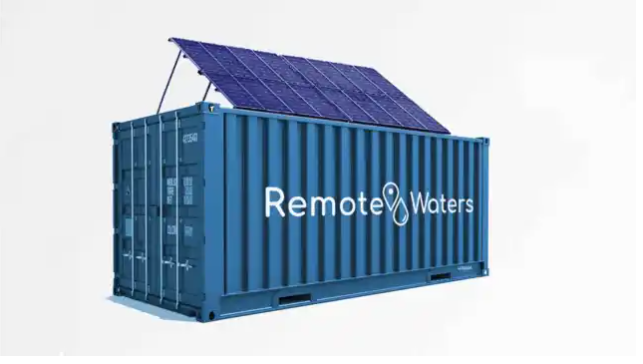
Remote Waters, a Chilean startup , has created a new modular water treatment and desalination system for small-scale, remote, rural, and off-grid areas. This invention has emerged as a promising solution in the fight against drought, capable of converting seawater or brackish water into clean and safe water . It stands out for producing 1,000 liters per hour, featuring a custom-designed membrane filtration system, and being powered by solar energy thanks to the integration of photovoltaic panels on its roof.
Despite the rains that fell in mid-January, Spain continues to face a significant drought, making water conservation crucial. With reservoirs in crisis condition, technology has been used to develop a series of inventions to ensure a constant supply of drinking water, such as one in Malaga that produces 1,000 liters per day, another that generates 750 liters per day, and yet another that can be installed at home and achieves 455 liters per day . Now, a new alternative has been presented from Chile: a modular system capable of producing 1,000 liters per hour .
Remote Waters, a Chilean startup , has created a new modular water treatment and desalination system for small-scale, remote, rural, and off-grid areas. This invention has emerged as a promising solution in the fight against drought, capable of converting seawater or brackish water into clean and safe water . It stands out for producing 1,000 liters per hour, featuring a custom-designed membrane filtration system, and being powered by solar energy thanks to the integration of photovoltaic panels on its roof.
Experts agree: "Lowering the blinds can reduce air conditioning consumption by up to 30%"Experts agree: "Lowering the blinds can reduce air conditioning consumption by up to 30%"
See More
"Remote Waters' vision is that water should not be a cause of conflict or poverty in the world . That's why we've created a small-scale, easily movable modular system that we can transport from Santiago, the capital of Chile, to anywhere in the country; or even design it ourselves and manufacture it locally in the countries where it's needed," says Pablo Cassorla, founder and CEO of the company, in an official video.
It supplies 100 houses
The Chilean company offers two versions of its water purifier: one optimized for groundwater and another for seawater. Both models are based on membrane technology and are powered by solar panels; however, their main advantage is their capacity to produce approximately 1,000 liters of water per hour. Therefore, each unit could supply up to 100 homes or 400 people, depending on location, demand, and battery capacity, according to Remote Waters.
Remote Waters uses membrane purification, which can include ultrafiltration or reverse osmosis technology, capable of rejecting particles larger than water, removing ions and other unwanted molecules. This allows the system to convert non-potable water sources, such as brackish or seawater, into potable water , providing a reliable source of hydration in remote areas, coastal communities, or emergency situations.
Despite the rains that fell in mid-January, Spain continues to face a significant drought, making water conservation crucial. With reservoirs in crisis condition, technology has been used to develop a series of inventions to ensure a constant supply of drinking water, such as one in Malaga that produces 1,000 liters per day, another that generates 750 liters per day, and yet another that can be installed at home and achieves 455 liters per day . Now, a new alternative has been presented from Chile: a modular system capable of producing 1,000 liters per hour .
Remote Waters, a Chilean startup , has created a new modular water treatment and desalination system for small-scale, remote, rural, and off-grid areas. This invention has emerged as a promising solution in the fight against drought, capable of converting seawater or brackish water into clean and safe water . It stands out for producing 1,000 liters per hour, featuring a custom-designed membrane filtration system, and being powered by solar energy thanks to the integration of photovoltaic panels on its roof.
Experts agree: "Lowering the blinds can reduce air conditioning consumption by up to 30%"La ESA hace historia: la versión más potente del cohete Ariane 6 despega con éxito y bate el récord europeo de carga útil
See More
"Remote Waters' vision is that water should not be a cause of conflict or poverty in the world . That's why we've created a small-scale, easily movable modular system that we can transport from Santiago, the capital of Chile, to anywhere in the country; or even design it ourselves and manufacture it locally in the countries where it's needed," says Pablo Cassorla, founder and CEO of the company, in an official video.
It supplies 100 houses
The Chilean company offers two versions of its water purifier: one optimized for groundwater and another for seawater. Both models are based on membrane technology and are powered by solar panels; however, their main advantage is their capacity to produce approximately 1,000 liters of water per hour. Therefore, each unit could supply up to 100 homes or 400 people, depending on location, demand, and battery capacity, according to Remote Waters.
Remote Waters uses membrane purification, which can include ultrafiltration or reverse osmosis technology, capable of rejecting particles larger than water, removing ions and other unwanted molecules. This allows the system to convert non-potable water sources, such as brackish or seawater, into potable water , providing a reliable source of hydration in remote areas, coastal communities, or emergency situations.
Remote Waters, the invention that produces a thousand liters of water per hour
Once purified, the water is stored in pressurized systems or elevated tanks for easy distribution. According to the company, Remote Waters can store up to 3 hours of operation, or 3,000 liters of water ; however, the user can install a tank with a larger capacity. The system can also pump water to larger tanks, such as 8,000 liters, or enough for a full day of operation at maximum capacity. It is advisable not to leave the water stagnant for several days, as in that case it would need to be recirculated to maintain its potability.
Remote Waters guarantees that the water it produces is "pure, clean, and safe," making it perfectly safe to drink. Another key feature of this system is that it cannot be connected to the electrical grid, as it is designed to run on renewable energy sources, specifically solar power via photovoltaic panels and artificial intelligence (AI). However, the most significant aspect of Remote Waters is its ability to be operated and monitored remotely, which reduces maintenance costs and improves the efficiency of troubleshooting.
This invention can connect via GPRS, 3G, or 4G mobile signal, enabling it to transmit information even without a Wi-Fi network. This allows the company's experts to closely monitor product performance, making adjustments and improvements, and recommending when parts need replacing. Meanwhile, users can view real-time statistics on consumption and water quality produced by Remote Waters through an app.
Easy to install
The company points out that its system has a wide range of advantages over other similar alternatives. Among these, they indicate that it is a device capable of providing clean and safe water by eliminating contaminants and viruses; and that it is easy to transport and quick to install , since it simply needs to be taken to the desired location, the solar panels connected, and it turned on. Furthermore, Remote Waters does not generate carbon dioxide (CO2) emissions and is independent of the electrical grid, making it sustainable as well.
Despite the rains that fell in mid-January, Spain continues to face a significant drought, making water conservation crucial. With reservoirs in crisis condition, technology has been used to develop a series of inventions to ensure a constant supply of drinking water, such as one in Malaga that produces 1,000 liters per day, another that generates 750 liters per day, and yet another that can be installed at home and achieves 455 liters per day . Now, a new alternative has been presented from Chile: a modular system capable of producing 1,000 liters per hour .
Remote Waters, a Chilean startup , has created a new modular water treatment and desalination system for small-scale, remote, rural, and off-grid areas. This invention has emerged as a promising solution in the fight against drought, capable of converting seawater or brackish water into clean and safe water . It stands out for producing 1,000 liters per hour, featuring a custom-designed membrane filtration system, and being powered by solar energy thanks to the integration of photovoltaic panels on its roof.
Experts agree: "Lowering the blinds can reduce air conditioning consumption by up to 30%"Los expertos coinciden: "Bajar las persianas puede reducir en hasta un 30% el consumo de aire acondicionado"
See More
"Remote Waters' vision is that water should not be a cause of conflict or poverty in the world . That's why we've created a small-scale, easily movable modular system that we can transport from Santiago, the capital of Chile, to anywhere in the country; or even design it ourselves and manufacture it locally in the countries where it's needed," says Pablo Cassorla, founder and CEO of the company, in an official video.
It supplies 100 houses
The Chilean company offers two versions of its water purifier: one optimized for groundwater and another for seawater. Both models are based on membrane technology and are powered by solar panels; however, their main advantage is their capacity to produce approximately 1,000 liters of water per hour. Therefore, each unit could supply up to 100 homes or 400 people, depending on location, demand, and battery capacity, according to Remote Waters.
Remote Waters uses membrane purification, which can include ultrafiltration or reverse osmosis technology, capable of rejecting particles larger than water, removing ions and other unwanted molecules. This allows the system to convert non-potable water sources, such as brackish or seawater, into potable water , providing a reliable source of hydration in remote areas, coastal communities, or emergency situations.
Remote Waters, the invention that produces a thousand liters of water per hour
Once purified, the water is stored in pressurized systems or elevated tanks for easy distribution. According to the company, Remote Waters can store up to 3 hours of operation, or 3,000 liters of water ; however, the user can install a tank with a larger capacity. The system can also pump water to larger tanks, such as 8,000 liters, or enough for a full day of operation at maximum capacity. It is advisable not to leave the water stagnant for several days, as in that case it would need to be recirculated to maintain its potability.
Remote Waters guarantees that the water it produces is "pure, clean, and safe," making it perfectly safe to drink. Another key feature of this system is that it cannot be connected to the electrical grid, as it is designed to run on renewable energy sources, specifically solar power via photovoltaic panels and artificial intelligence (AI). However, the most significant aspect of Remote Waters is its ability to be operated and monitored remotely, which reduces maintenance costs and improves the efficiency of troubleshooting.
The Remote Waters device. Remote Waters Omicrono
This invention can connect via GPRS, 3G, or 4G mobile signal, enabling it to transmit information even without a Wi-Fi network. This allows the company's experts to closely monitor product performance, making adjustments and improvements, and recommending when parts need replacing. Meanwhile, users can view real-time statistics on consumption and water quality produced by Remote Waters through an app.
Easy to install
The company points out that its system has a wide range of advantages over other similar alternatives. Among these, they indicate that it is a device capable of providing clean and safe water by eliminating contaminants and viruses; and that it is easy to transport and quick to install , since it simply needs to be taken to the desired location, the solar panels connected, and it turned on. Furthermore, Remote Waters does not generate carbon dioxide (CO2) emissions and is independent of the electrical grid, making it sustainable as well.
The other version of the Remote Waters invention. Remote Waters Omicrono
On the other hand, the company indicates that traditional water purification systems are designed to operate with a specific type of water. However, the quality of the water source can vary over time (winter or summer), and in the event of scarcity, it may be necessary to use other sources. Their technology, however, is adaptable to different water sources. Another important benefit is that Remote Waters can operate autonomously and be remotely controlled with self-cleaning schedules and automatic adjustments based on the day's solar power.
Remote Waters can also be used in a variety of situations . For example, seawater desalination can provide drinking water to areas where it was previously unavailable. This technology can also serve as a permanent or temporary, lower-cost drinking water solution for communities, or it can be used quickly and safely in emergency situations, such as natural disasters.
Although it's already being tested in Chile, the CEO has more ambitious plans for his product. The company is in talks with major corporations to explore financing options and expand its business model to other Latin American countries. It has even set the goal of franchising the brand and increasing its capacity to provide clean water to various communities.